Follow jazzbasslines on Twitter Constructing Walking Jazz Bass Lines - Jazz Bass Lines in 12 Keys - Jazz Bass Books & lessons for the Upright and Electric Bass Player

Constructing Walking Jazz Bass Lines Jazz Bass Lines in 12 Keys - Jazz Bass Books & lessons for the Upright and Electric Bass Player 

FREE US SHIPPING ON ALL JAZZ  BASS BOOKS


The Complete  Constructing Walking Jazz Bass Lines set 

 $ 74.85  save  32 %   now $ 49.95

also available in Bass tab edition

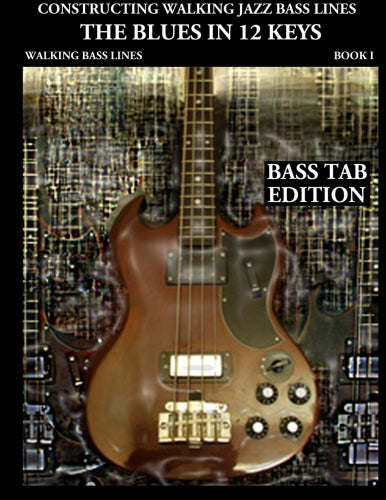
Book I - The blues in 12 keys

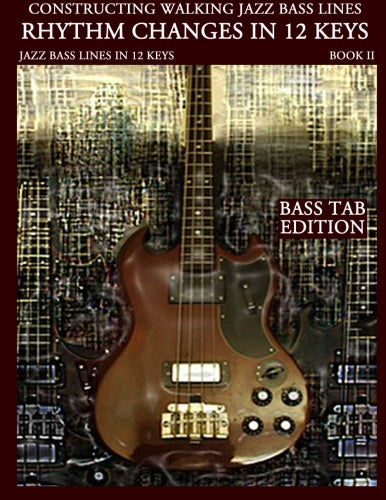
Book II - Rhythm changes in 12 keys

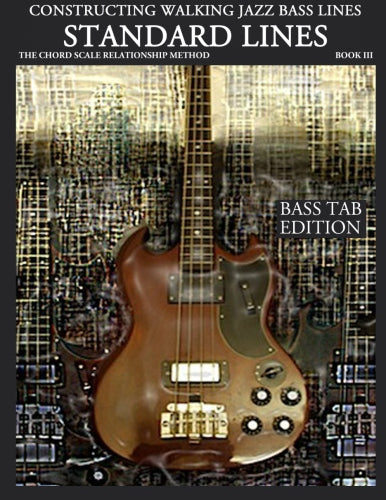
Book III - Standard Lines 


3 book set complete with over 360 choruses of jazz walking bass lines completely  written out  featuring   jazz  standards , bebop, latin jazz, the blues in 12 keys and rhythm changes in 12 keys.   $ 74.85  save  32 %   now $ 49.95

also available in Bass tab edition


Watch the video lesson from the book 

Constructing Walking Jazz Bass Lines Book I 

see more blues examples from Book I


STANDARD LINES   Book III 

Jazz standards , bebop and latin jazz standards.


Constructing walking jazz bass lines Book III jazz standard lines upright bass double bass electric bass method


See inside the book 


Constructing Walking Jazz Bass Lines Book II 

 Rhythm changes in 12 keys


JAZZ BASS LINES UPRIGHT BASS ELECTRIC BASS CONSTRUCTING WALKING JAZZ BASS LINES

Watch the video lesson from the book

Constructing Walking Jazz Bass Lines Book II

 jazz bass lines walking bass lines constructing walking jazz bass lines book II rhythm changes in 12 keys ex3

 jazz bass lines walking bass lines constructing walking jazz bass lines book II rhythm changes in 12 keys ex6

See more examples from Book II

Watch the video bass lesson 

See inside the book 


Watch the video lesson from the book

Watch video lesson II from the book

Constructing Walking Jazz Bass Lines Book I  

Bass Tab Edition

constructing walking jazz-8

jazz bass tab jazz bass lines constructing walking jazz bass lines walking bass lines the blues in 12 keys bass tab edition 9780982957004c

jazz bass tab jazz bass lines constructing walking jazz bass lines walking bass lines the blues in 12 keys bass tab edition 9780982957004e

See more Blues bass tab examples


constructing walking jazz med-11

Watch the video lesson form the book

Constructing Walking Jazz Bass Lines Book II

 jazz bass lines walking bass lines constructing walking jazz bass lines book II rhythm changes in 12 keys ex3

constructing walking jazz bass lines book II rhythm changes in 12 keys bass tab edition j5


see more jazz bass tab from book II

constructing walking jazz bass lines book III Standard lines jazz bass tab , walking bass lines jazz bass tabs

STANDARD LINES      The Chord Scale relationship method

Book III in the Constructing Walking Jazz Bass Lines 

Series.For the Electric Bassist 

See inside the book 

Readers reviews

5.0 out of 5 stars A very Comprehensive and Practical Method for beginner and intermediate/advanced bass players, September 24, 2011

By 

Jahrah7 - See all my reviews

This review is from: Constructing Walking Jazz Bass Lines Book III - Walking Bass Lines - Standard Lines - The Modes & the chord scale relationship method (Volume 3) (Paperback)

I am highly recommending Steven Mooney's method for Constructing Walking Bass Lines Book I The Blues in 12 Keys, Book II Rhythm Changes in 12 Keys and Book III Standard lines which I purchased mid July and I am eagerly awaiting Book IV. If you can read music a little bit or read TAB, this is the Method for YOU. 

Steven's approach is masterly crafted to ensure that you are playing strong Bass Lines right out of the Gate in all Twelve Keys with numerous exercises to reinforce each and every concept whether Theoretically and/or Harmonically in a very Comprehensive and Progressive approach including clearly written directions of the various concepts for the thoroughly written out exercises. As we all know, we all learn by doing. Steven's method provides numerous exercises to keep each and every aspiring Bassist enthuse about Learning and Creating Walking Bass Lines.

I have worked with literally over twenty different method books and Steven Mooney's approach is definitely the best of the best that I have worked with. It is very player friendly throughout and it is masterfully crafted! In addition to a lifetime's work going into creating these books more importantly is the willingness to patiently share this knowledge with others that makes all the difference and Steven should be very, very proud of that accomplishment.

In addition I am truly having the time of my life with these books and I have only just begun!!! So many varied exercises to reinforce the concepts, techniques and sight reading among others! 

Moreover, it is a lot of FUN! Steven SHARES the Mysteries of Understanding and Creating Melodic Walking Bass Lines. I personally find it challenging to stay away from his books but I know I should actively be working on Simandl, Ray Brown, Rufus Reid, Harvey Vinson, John Goldsby, Chuck Sher, Ed Friedman, Bunny Brunel, Bob Magnusson, James Jamerson and Jamey Aebersol methods as well!!! 

Enjoy! 

5.0 out of 5 starsMr Mooney's Latest Tool for the Jazz Bassist, July 24, 2011


By 

Richard T. Harris - See all my reviews

This review is from: Constructing Walking Jazz Bass Lines, Book 3: Walking Bass Lines- Standard Lines- The Chord Scale Relationship Method, Bass Tab Edition (Paperback)

"Standard Lines" is the 3rd installment of Steven Mooney's "Constructing Walking Jazz Bass Lines" series. Here's hoping it is far from the last. The book details many techniques that are a revelation to the aspiring bassist, and a good review for the advanced musician. For example Part 1 starts, innoculously enough, with the subject "How to Construct the Triads off the 
major scale". Mr Mooney walks the reader through that subject detailing both the notes for the triads used and a nicely done example. Mr Mooney also goes into depth here by explaining chromatic approaches walks up and down. In the next section, we find the Scalar approach, which details the technique for the bassists usage of using scales as a foundation as opposed to triads. 
Part 2 outlines the use of Symmetric and Melodic Minor scales. Diminished and Whole tone scales are covered for the avid reader. Part 3 covers Be Bop Scales. Is Hip Hop the grandchild of Be Bop? Someone should answer that burning question, but I don't expect Mr. Mooney to do so. He applies himself quite well to the serious subjects at hand. Part 4 is Jazz Bass line examples over Standard Jazz Chord Construction. In this section we find exercises for the bassist that are both challenging and therefore interesting for all bassists. 
Mr. Mooney's latest book is a must read for all of us who ply the "Dark Strings". I keep opening all three of his books for education and fun playing. I'm sure you will also.

jazz bass book the blues in 12 keys isbn9780982957011-2


JAZZ BASS LINES UPRIGHT BASS ELECTRIC BASS CONSTRUCTING WALKING JAZZ BASS LINES -1

Midwest Book Review Book watch January 2011
Constructing Walking Jazz Bass Lines
Steven Mooney
Waterfall Publishing House
www.Waterfallpublishinghouse.com
www.Constructingwalkingjazzbasslines.com
9780982957011, $19.95, www.amazon.com

"Constructing Walking Jazz Bass Lines, Book 1, The Blues in 12 Keys: A Comprehensive Guide To Constructing Walking Jazz Bass Lines for the Double Bassist and Electric Jazz Bassist" is a complete 12-key guide to techniques and devices used to construct walking jazz bass lines in the jazz tradition.

Part I, the Blues in F, presents exercises and techniques known to help create robust jazz bass lines, moving forward while retaining a solid rhythmic, harmonic foundation. Part 2, The Blues in 12 Keys, expands further the lessons of Part 1, providing previous techniques and devices used in professional level bass lines in all 12 keys. The practical and ambitious aim of "Constructing Walking Jazz Bass Lines" is "to give the aspiring bassist a solid grounding in understanding how to construct walking Jazz Bass lines and support a melody and or soloist (p. 97)." The Book concludes with sage advice, "Listen to as much music as you can, Listen to the masters (p.97)."

Included is full notations with enharmonic chord symbols for more than 150 choruses of jazz blues lines in all 12 keys, using the whole register of the instrument. "Constructing Walking Jazz Bass Lines Book 1" is an invaluable resource to the aspiring jazz bassist, with potential for learning teaching and great practical application.

Also recommended in this series by the same author is: "Constructing Walking Jazz Bass Lines, Rhythm Changes in 12 Keys," ISBN 9780982957028, $19.95. Additionally recommended is "Constructive Walking Jazz Bass Lines Book II, Bass Tab Edition," ISBN 9780982957035, $19.95.


“looking at the examples, I  can tell you that they will be very useful in learning these specifically  important Jazz progressions in every key, which practically every Jazz teacher  tells me I should do!  My music theory training gives me enough insight  to recognize that they will be very useful.  The appearance and lay-out  are comfortable to look-at, which makes it all easier to read;  and I  like the Jazz fonts!  I am particularly pleased that all the examples are  completely written-out note-for-note;  whereas in many books by other  authors, an example will be given in one key with the other keys being left up  to the student to figure-out!  I always found that to be extremely  frustrating.
 
It's nice that you covered so many variations on the  basic A part progression of Rhythm Changes, since that's the way the the song  really gets played... and to write-out all the bass lines instead of just the  chord symbols.  This lets the student learn the actual melodic motion of  bass lines in the way that they are really used.  The use of scale-type  phrases, chromatic lines, occasional wide interval leaps, and rhythmic  variations (such as quarter-note triplets and dotted-eighth/sixteenth notes)  ...all in context... really puts it all in proper perspective.  It shows  how those devices are actually used!  That's the stuff people learn-from  through specific examples!  Then once the student gets the hang of it,  one should be able to call on these ideas in increasingly improvisational and  hence musical ways.” 


Doug  Seattle Washington USA 


" bonjour, 
i don't find book III .
i've already book one and two , i like it .
where i'll buy book III ?" 


Lolowes 2002 France 


" I should take you a picture of the
stack of bass books I have, but I have never been able to retain or
understand how lines are constructed, how modes work, etc.  The progression
of information you are presenting has made very clear what has been a fog to
me for years, and I am excited to be opening the door I have been standing
in front of since I was a teenager. " 
Jon   Idaho USA 


"I recently purchased Book I , it is the one I wanted.  So I

 am looking forward to being the Book II will be available.

 I understand Book II will be released soon.  Since I live in Japan, I hope

 Book II will be available on Amazon.co.jp soon. "


Hideo  Japan 


 " I recently purchased book II from amazom.co.jp, and it is also good book for me."


Hideo  Japan 


jazz bass book constructing walking jazz bass lines book I the blues in 12 keys

5.0 out of 5 stars初心者に最適なウォーキング・ベース入門書, 

2011/6/14

By 

千葉贋作 - See all my reviews

レビュー対象商品: コンストラクティング ウォーキング ジャズ ベースラインズ ブック 1 ウォーキング ベースラインズ ブルース イン 12キー ベースタブ譜 バージョン (ペーパーバック)

ウォーキング・ベース奏法について興味を持っているエレクトリック・ベース初心者に、最適な教本だと思いました。 

読譜できる方は勿論、素早く読譜できない方や譜面が読めない方でも、TAB譜付きなので(TAB譜を読む知識は必要となりますが)ウォーキング・ベース奏法を学ぶ事に集中できるのが魅力的です。 

前半(パート1)は、「どのようにウォーキングすれば良いのか」について、わかりやすい順序で配分良く解説されているので、どなたでも挫折せずに続ける事ができると思います。 
練習を始める前は「コード進行に従った構成音の知識が必要かな」と思いましたが、要所要所で十分で丁寧な説明があるので、コード理論を熟知していない方も、一つずつ正しく理解して進む事ができると思います。 

後半(パート2)は、12のキー全てのウォーキング・ベース譜が載っているのですが… 
1つ、2つのキーでのウォーキングを覚えて「後は単純に移調すれば良い(ポジションをずらせば良い)」等と思っていると、運指も移調しただけ…という感じになりやすいと思いますが… 
ジャズスタイルにおけるベース本来の役割から逸れる事がないように考慮された150コーラスを超える実例が含まれているそうですので、全てのキーをメカニカルに練習することで、基礎的なリズム感を強化し、同時に音楽を形作るハーモニーを演奏できる力を身につける手助けになると思います。 


ギター類の教本では、数も多く、アプローチも多種多様な感じで、自分に合った教本に巡りあうのは難しい事ではないですが、ベースの教本では、派手な奏法については良いものもありますが、基本的な部分を丁寧に解説している本は、今までなかったと思います。 

私事ですが… 
僕は、あまり熱心に練習するタイプではないですが…この教本は、挫折したとしても「もう一度、始めよう」と思わせてくれそうな感じがします。 
どうしてもギターの延長上になってしまう僕の弾き方が、将来、ベースらしい弾き方に変わってくれると良いな…と期待しています。勿論、自分の練習次第ですけど…


5.0 out of 5 starsJazz Bass Lines, 

15 May 2011

By 

Ironmad Wilkinson

This review is from: Constructing Walking Jazz Bass Lines Book I: The Blues in 12 Keys - Double bass & Electric bass Method (Paperback)

I am currently learning upright bass and learning to read music - this is the perfect book. I have created the chords behind the exercises in GuitarPro and it has really helped me to get a good understanding of jazz bass lines. I have looked at many books out there, but this really is the best I've come across.


5.0 out of 5 stars Highly Recommended Jazz Bass Series April 15, 2011
By 
The Jazzer        

This review is from: Constructing Walking Jazz Bass Lines, Book 1: Walking Bass Lines- The Blues in 12 Keys Upright Bass and Electric Bass Method (Paperback)
Recommending both Book 1 (The Blues in 12 Keys) and Book 2 (Rhythm Changes in 12 Keys) as a pair for building a firm foundation in learning how to play Jazz bass lines: 

The 12-bar blues and "Rhythm" changes (coming from "I Got Rhythm") are two of the fundamental building-block progressions in Jazz. Together, they form a basis for understanding much of Jazz. These progressions, or portions of them, are used again-and-again throughout the Jazz repertoire. Yet, it is nice that so many variations are given on the basic A-part of the Rhythm Changes progression, since that is the way it really gets played: not just the same lines repeated over-and-over. 

I am particularly pleased that all the examples are completely written-out note-for-note; whereas in many books by other authors, an example will be given in one key with the other keys being left up to the student to figure-out! I always found that to be extremely frustrating. 

Writing-out all the bass lines instead of just the chord symbols lets the student learn the actual melodic motion of bass lines in the way that they are really used. The use of scale-type phrases, chromatic lines, occasional wide interval leaps, and rhythmic variations (such as quarter-note triplets and dotted-eighth/sixteenth notes) ...in full context... really puts it all in proper perspective. It shows how those devices are actually used! That's the stuff people learn-from through specific examples! Then once the student becomes familiar with it all and gets the hang of it, he or she should be able to call on these ideas in increasingly improvisational and hence musical ways. 

The books will be very useful in learning these specifically important Jazz progressions in every key, which practically every Jazz teacher tells me I should do! Many years of Jazz music-theory training gives me enough insight to recognize that the given examples will be very useful tools in gaining a good grasp of the melodic nature of walking bass lines. Additionally, the appearance and lay-out are comfortable to look-at, which makes it all easier to read; and I like the Jazz fonts!


5.0 out of 5 starsAn invaluable resource to the aspiring jazz bassist, 

January 9, 2011

By 

Midwest Book Review (Oregon, WI USA) - See all my reviews

This review is from: Constructing Walking Jazz Bass Lines, Book 1: Walking Bass Lines- The Blues in 12 Keys Upright Bass and Electric Bass Method (Paperback)

"Constructing Walking Jazz Bass Lines, Book 1, The Blues in 12 Keys: A Comprehensive Guide To Constructing Walking Jazz Bass Lines for the Double Bassist and Electric Jazz Bassist" is a complete 12-key guide to techniques and devices used to construct walking jazz bass lines in the jazz tradition. 

Part I, the Blues in F, presents exercises and techniques known to help create robust jazz bass lines, moving forward while retaining a solid rhythmic, harmonic foundation. Part 2, The Blues in 12 Keys, expands further the lessons of Part 1, providing previous techniques and devices used in professional level bass lines in all 12 keys. The practical and ambitious aim of "Constructing Walking Jazz Bass Lines" is "to give the aspiring bassist a solid grounding in understanding how to construct walking Jazz Bass lines and support a melody and or soloist (p. 97)." The Book concludes with sage advice, "Listen to as much music as you can, Listen to the masters (p.97)." 

Included is full notations with enharmonic chord symbols for more than 150 choruses of jazz blues lines in all 12 keys, using the whole register of the instrument. "Constructing Walking Jazz Bass Lines Book 1" is an invaluable resource to the aspiring jazz bassist, with potential for learning teaching and great practical application. 


5.0 out of 5 starsAn Essential Jazz Bassists Book, 

October 3, 2010
This review is from: CONSTRUCTING WALKING JAZZ BASS LINES BOOK I WALKING BASS LINES: THE BLUES IN 12 KEYS (Paperback)

First of all, the title is a bit of a misnomer. Yes, there are transcriptions of Blues in all twelve keys. The transcriptions are 3 to 5 pages each. But what the beginning to intermediate bassist will find most usefull are the 33 pages, at the beginning of the book, demonstrating the various devices that Jazz Bassists use to construct effective bass lines. The Advanced player will welcome the books interesting exercises to use for keeping the chops up. Steven Moody, the author, guides the reader through exercises including Chromatic Approaches, Dominant 7th Chords, Harmonic anticipation, Voice leading tones, and Tri-Tone Substitution. Mr. Moody's book gives clearly written directions of the various techniques,followed by bass clef progressions that detail the examples. All the examples are interesting and go beyond the usual straight 4 beats to the bar that unfortunately fill up many of the books that I've purchased. I can see that this book will end up as dog-eared and ragged as my copy of Simandl, from repeated use.


jazz bass tab walking bass lines constructing walking jazz bass lines jazz bass tab constructing walking jazz bass lines book I the blues in 12 keys bass tab edition


1 Review


Most Helpful Customer Reviews

5.0 out of 5 stars A very useful resource December 5, 2010
By 
This review is from: Constructing Walking Jazz Bass Lines, Book 1: Walking Bass Lines - The Blues in 12 Keys (Bass tab edition) (Paperback)
The Bass can be the glue that holds the music together, not obviously there, but noticed if it's missing. "Construction Walking Jazz Bass Lines" discusses the jazz bass and its importance to the music. Providing a wide collection of bass tabs for many common jazz bass lines, Steven Mooney offers a useful book full of tabs with tips on how to use them well. For any with skill with a bass guitar and interest in jazz, "Construction Walking Jazz Bass Lines" is a very useful resource.
Help other customers find the most helpful reviews 
Was this review helpful to you? Yes No


The  CONSTRUCTING WALKING JAZZ BASS LINES series is a jazz bass method and instructional book series for the Upright/ Double Bass and the Electric Bass    


The series outlines the MUST KNOW jazz chord changes and the devices used by professional jazz bassists to construct jazz walking bass lines.

The series covers jazz harmony, theory, how to walk jazz bass lines and how to build a 12 key facility. 


JOIN US ON FACEBOOK

copyright 2011 constructing walking jazz bass lines .
Follow jazzbasslines on Twitter